

OASIS Diagnostics Oniry App
When seconds matter for health – digital support for postpartum diagnostics
In medicine, there are moments when time is not just a resource – it is a critical diagnostic factor.
OASIS, a Warsaw-based medical startup, set itself an ambitious goal: to accelerate and improve the diagnosis of postpartum injuries, which often require rapid and precise clinical assessment.
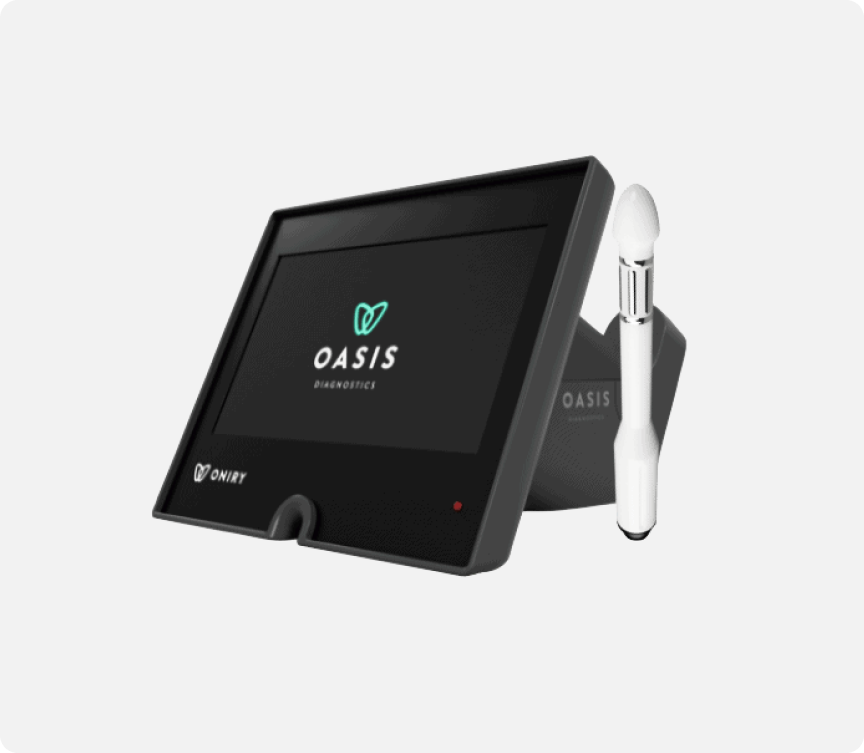
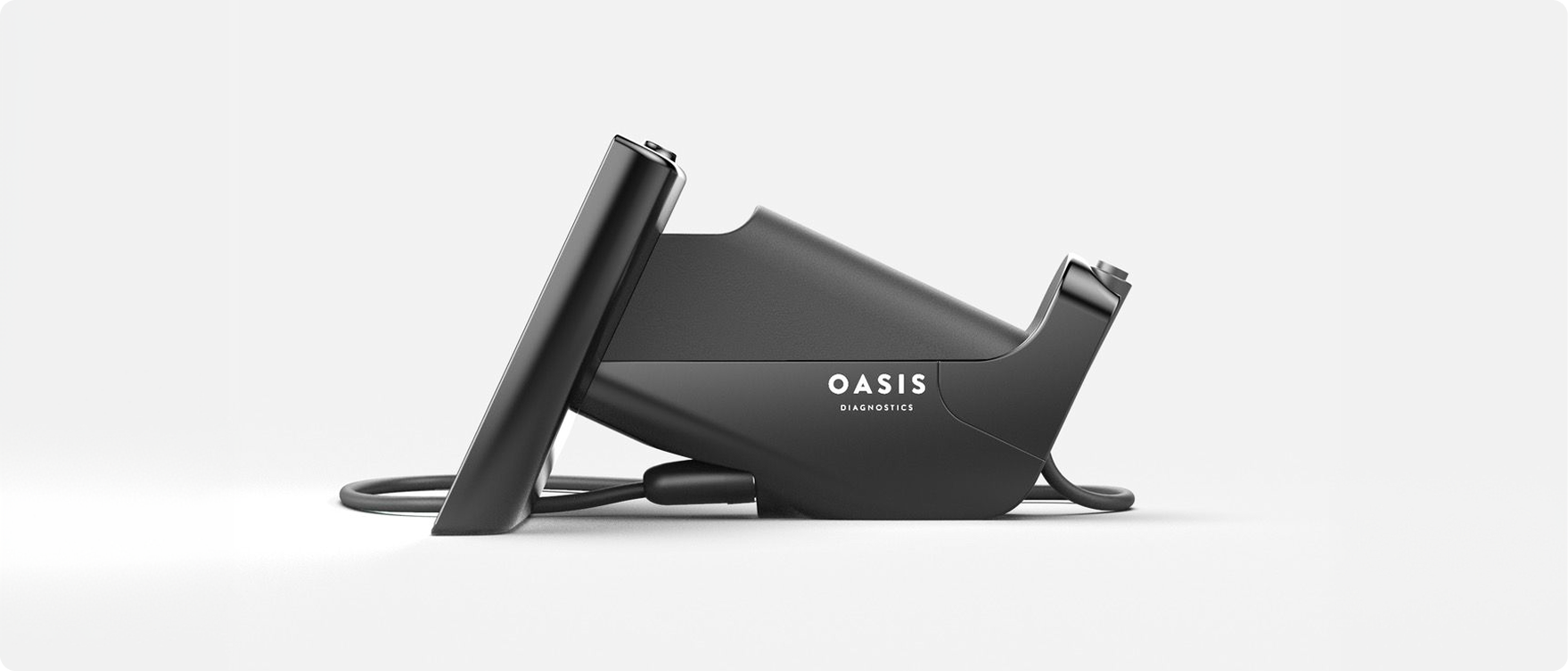
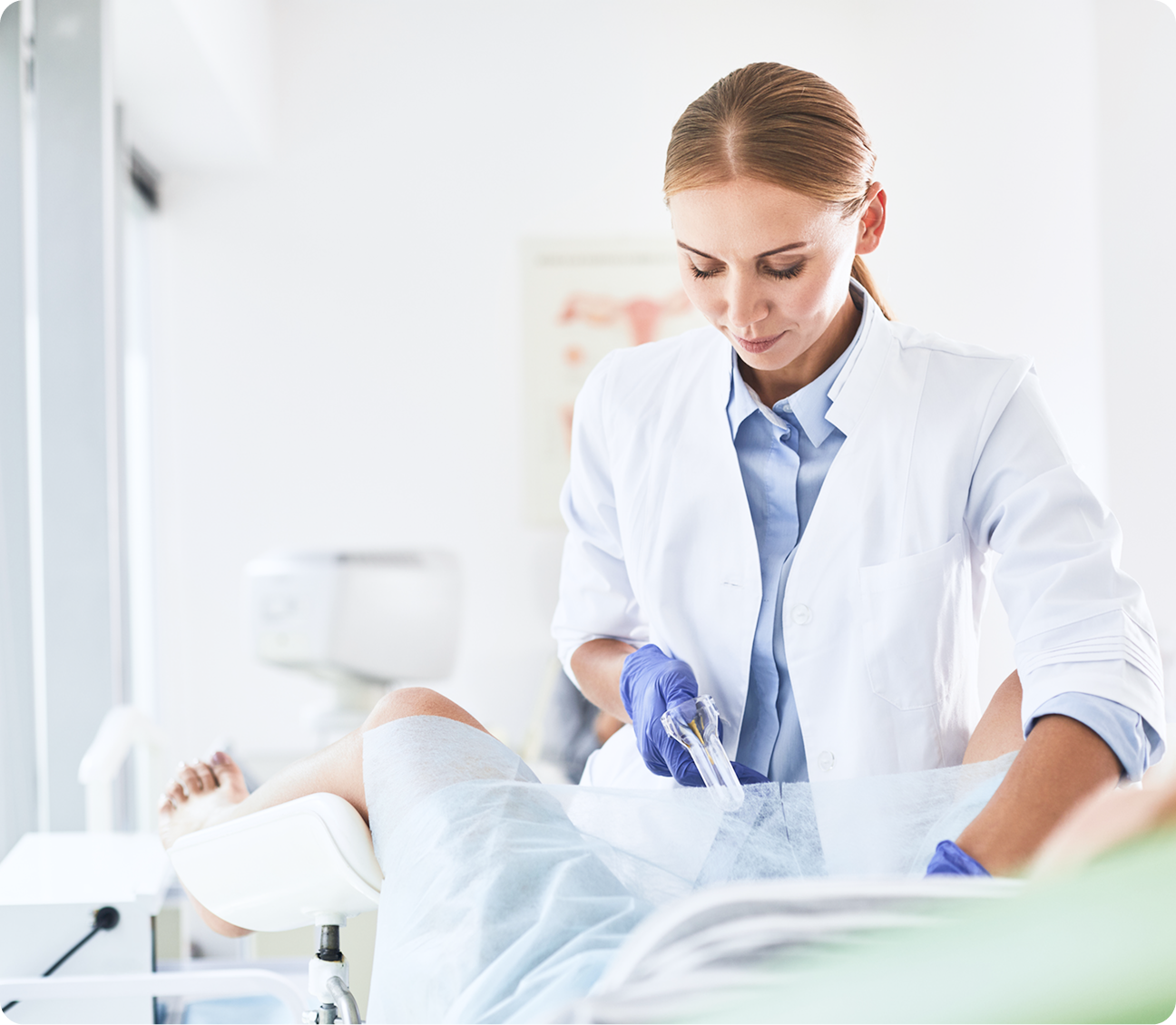
This led to the creation of ONIRY – an innovative medical device powered by a proprietary algorithm based on data analysis and machine learning. Its task is to detect anal sphincter injuries following vaginal delivery in just a few dozen seconds.
But the device itself was not enough.
For the technology to genuinely support doctors, a layer was needed to connect data, the user, and the medical workflow into one coherent ecosystem.
This is how the ONIRY application came to life.
Turning advanced hardware into an intuitive ecosystem
The ONIRY device operated independently and was capable of performing diagnostics, but its functionality was limited to basic examination support.
In practice, this meant several key challenges:
The ONIRY device effectively supported diagnostics, but operated in isolation. Doctors had no convenient access to a patient’s previous results or the ability to quickly compare documentation between examinations.
The key challenge was to build a stable, invisible-to-the-user bridge between the physical medical device and the computer system. We needed to tame the raw technology and translate complex machine-learning scripts into a lightweight, seamless interface.
In a demanding clinical environment, medical staff need the ability to edit data immediately, add notes after an examination, and quickly generate documentation. Without a dedicated application, the device left no room for personalizing medical reports.
Postpartum diagnostics involves some of the most sensitive medical information. The challenge was to design a system that guaranteed uncompromising protection of patients’ data, complied with strict legal requirements, and at the same time did not hinder doctors’ daily work under time pressure.
An additional challenge was the specific nature of the device itself. Communication took place via USB, while the diagnostic system was based on dedicated Python scripts.
The project therefore required not only designing an application, but also creating a bridge between the world of medical hardware and modern software.
Putting advanced technology at your fingertips with one intuitive click
The goal was to create a desktop application that would:
- expand the capabilities of the ONIRY device
- simplify the diagnostic process
- provide doctors with quick access to patient data and examination results
- enable the generation of professional medical reports
- maintain compliance with medical environment and data security requirements
A digital ecosystem tailored to the demands of healthcare
The itCraft team designed and implemented a desktop application based on web technologies, creating a coherent and intuitive working environment for medical staff.
The ONIRY application was built using the following architecture:

Reliable desktop application (Electron & Node.js)

Intuitive and fast interface (React)
Direct bridge to the device (Python)
Encryption and research cloud (SQLite & AWS S3)
The key assumption was to package the entire solution into a single installation file containing all necessary components – from the application and database to the Python interpreter – for both Windows and macOS systems.
A new way of working with ONIRY
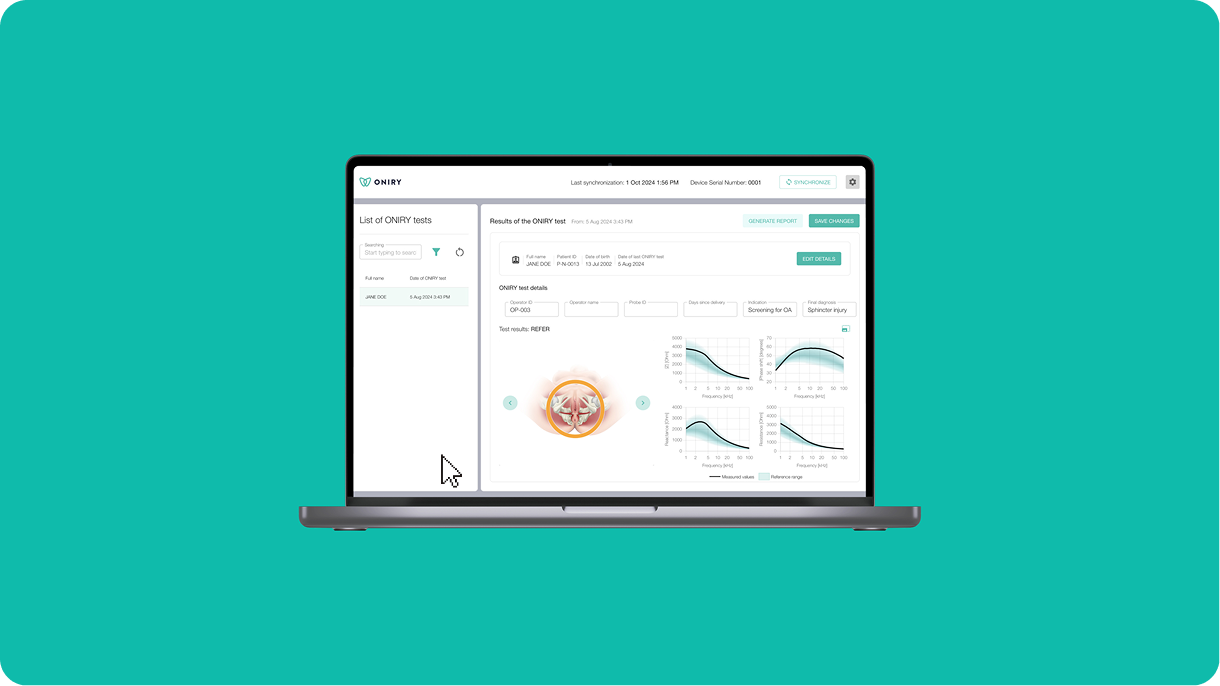
The ONIRY application became the central hub for managing examinations.
From a single interface, users can:
- view the list of examinations and patient histories
- search and filter results using multiple parameters
- complete and edit patient data and examination details
- analyze graphical diagnostic results
- generate personalized PDF reports ready for medical documentation
- synchronize data with the ONIRY device
- manage system settings and access (PIN, security)
The application also supports the development of the diagnostic algorithm itself by sending anonymized data for further analysis and ML model training.
Security was a key priority throughout the project.
Patient data is stored locally in an encrypted SQLite database, while synchronization and export processes were designed with the requirements of the medical environment in mind.
The application also enables deliberate data management in accordance with GDPR requirements: data can be exported, deleted from the device or system, and the entire process remains under full control.
From a single examination to a complete medical ecosystem
Through its collaboration with itCraft, OASIS received a solution that genuinely expands the capabilities of the ONIRY device and transforms the way medical data is handled.
The new application:
- significantly accelerated the diagnostic process
- made medical staff’s work easier through an intuitive interface
- organized and standardized examination documentation
- enabled the generation of professional medical reports
- created a foundation for further development of the ML algorithm
Most importantly, it made it possible to move advanced diagnostics from the device level into a complete digital medical ecosystem.
Technology with empathy at critical clinical moments
Let’s talk
with us
Do you have an idea or a challenge you face every day? We’d love to hear about it. Let’s start with a relaxed conversation about your needs, on your terms and with complete confidentiality.


