

Transform your
medical concept
into a certified product
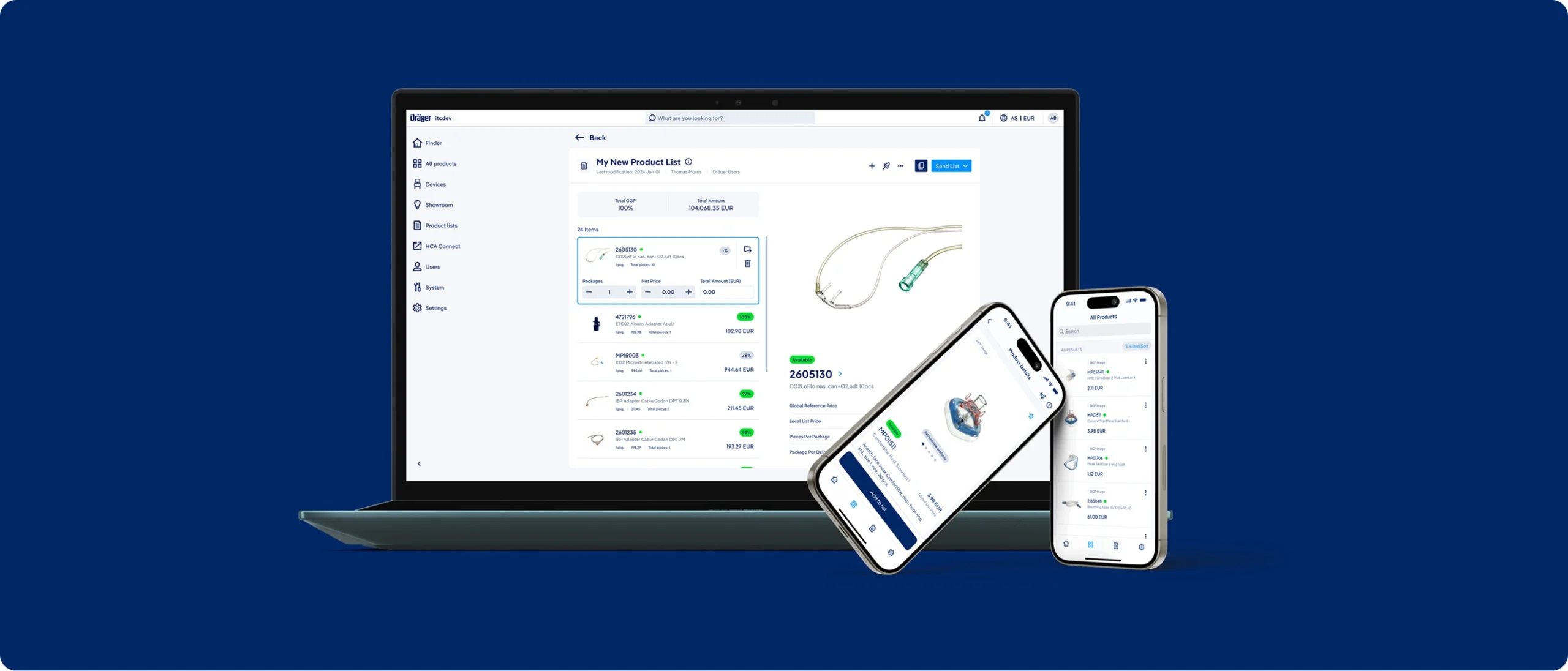
Consistent medical data environment without silos
In modern medicine, time and flawless information flow determine patient health. We connect dispersed, previously independent IT environments into a single cohesive ecosystem that seamlessly exchanges data. We use international medical standards (HL7, FHIR, DICOM) to ensure instant communication between hospital systems, laboratories, and state platforms – without delays and without manual data re-entry.
Main IT challenges in medical facilities
Dispersed, non-communicating applications generate real operational, financial, and clinical problems. We help eliminate the most common ones:

Data Silos

Wasting staff time

Risk of diagnostic errors

Administrative burden
Standards that build a cohesive IT architecture in medicine
You don’t have to replace all your software with new ones. We build technological bridges that allow systems to truly cooperate, not just coexist.
We connect hospital, laboratory, and imaging diagnostics systems, automating the flow of orders and results.
We ensure secure, fast, and standardized exchange of clinical and administrative data in accordance with global guidelines.
We enable smooth transfer and immediate access to radiological examination results directly in the patient's file.
We connect your IT environment with central e-health systems (e-prescriptions, e-referrals, e-ZLA).
Thanks to this, integrations remain scalable and withstand changes in the facility’s IT environment.
We tailor each project to the specificity and technological maturity of your facility. We operate in a structured manner, minimizing the risk of staff downtime:
What does the integration process look like?
Analysis and audit
Architecture design
Implementation and testing
Maintenance and development
Staff work comfort and higher quality of patient care
Well-designed integrations automate routine processes, bringing tangible benefits at every level of the organization. Data is no longer dispersed, and the daily work of staff becomes faster and more organized.

Faster access to patient data and fewer documentation errors
Complete medical information from various systems, such as hospital, laboratory, or diagnostic systems, is available in one place and in real-time. This means doctors and medical staff do not have to switch between multiple applications or search for data in dispersed sources.
This facilitates clinical decision-making, shortens diagnostic time, and allows for quicker response to changing patient conditions.
Eliminating manual data re-entry between systems significantly reduces the risk of errors in medical documentation, test results, and orders. Data is consistent and automatically synchronized, increasing its reliability across the entire IT ecosystem.
At the same time, automating administrative processes relieves medical staff from repetitive tasks, allowing them to focus on direct patient care and improving the quality of care.
Scalable IT ecosystem
You receive an architecture that grows with the facility and does not require rebuilding existing systems with each new implementation. Integrations are designed to easily connect additional modules, systems, or external services.
This keeps the IT environment flexible, ready for organizational and technological changes, and the investment in integration has a long-term character.

Experience in the HealthTech sector confirmed by standards
As a technology partner, we deliver solutions that combine high operational efficiency with the highest level of security.
Data security and certification
We design integration architectures while maintaining strict legal and medical data security requirements. Our competencies are confirmed by ISO certificates and many years of experience in creating dedicated medical systems for clients worldwide.
Unlock the potential of data
in your facility
Tired of dispersed systems and information flow issues? Let’s talk about how we can connect your software into a single cohesive ecosystem.


